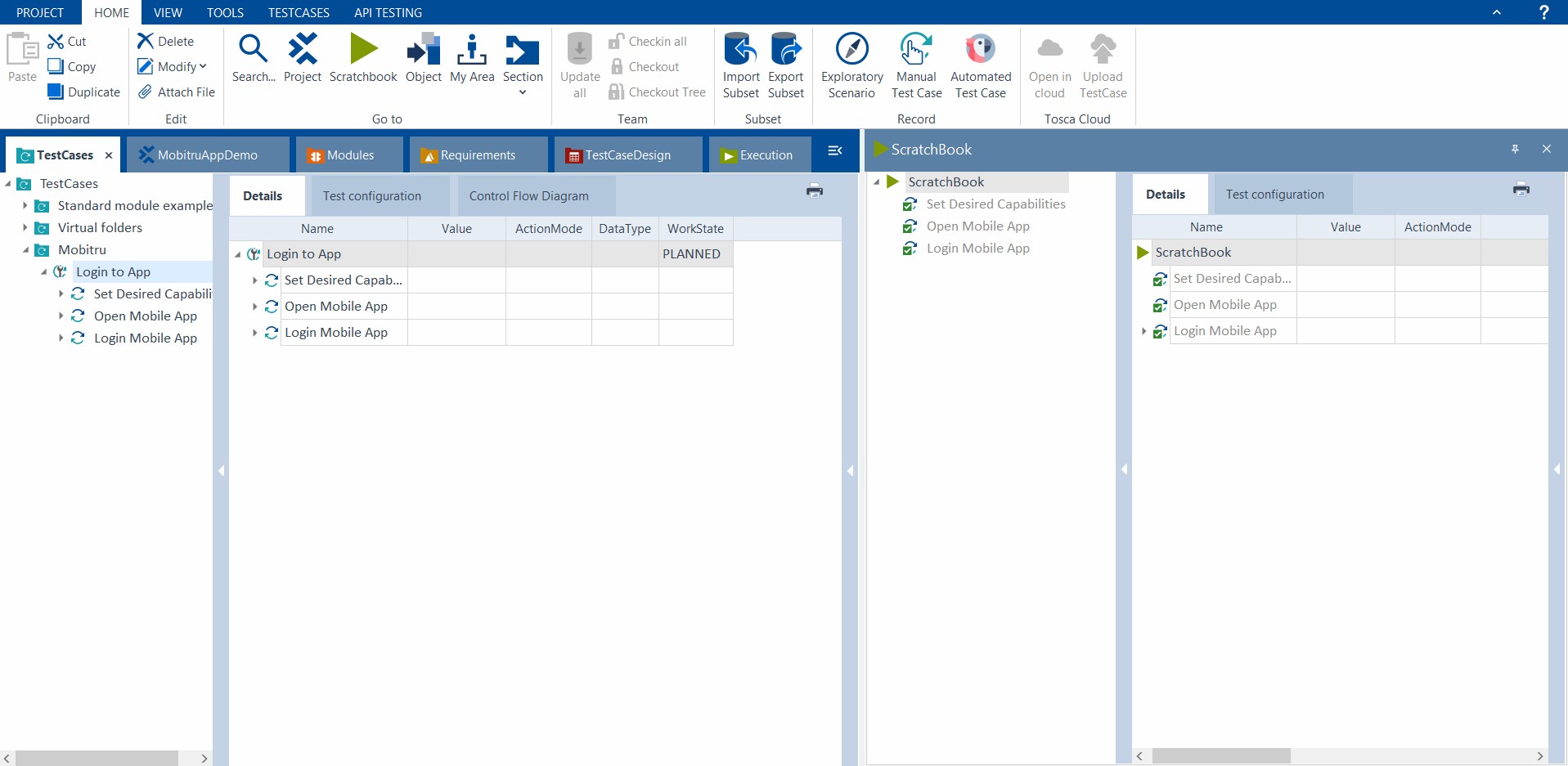
Run tests in Tricentis Tosca
After creating your automated tests in Tricentis Tosca, you can execute them on Mobitru’s mobile devices to ensure comprehensive coverage across various platforms and device types.
Below, you can find a step-by-step guide detailing how to configure, connect, and run your Tosca tests.
Step 1: Find and take a device
Find and take the appropriate device on Devices tab or using our APIs:
Here is an example of cURL request to find a device via API:
Android:

curl --location --request GET 'https://app.mobitru.com/billing/unit/<BILLING_UNIT>/automation/api/device/android?model=Pixel 6' \
--header 'Authorization: Bearer <ACCESS_KEY>'

iOS:

curl --location --request GET 'https://app.mobitru.com/billing/unit/<BILLING_UNIT>/automation/api/device/ios?version=16.2' \
--header 'Authorization: Bearer <ACCESS_KEY>'
Here is an example of cURL request to take a device via API :
Android:

curl --location --request POST 'https://app.mobitru.com/billing/unit/<BILLING_UNIT>/automation/api/device/26281JEGR04493' \
--header 'Authorization: Bearer <ACCESS_KEY>'

iOS:

curl --location --request POST 'https://app.mobitru.com/billing/unit/<BILLING_UNIT>/automation/api/device/00008101-00042D8A1190001E' \
--header 'Authorization: Bearer <ACCESS_KEY>'
Step 2: Upload and install your app
Upload your Android app (.apk file) or iOS app (.ipa file) to the Mobitru and perform the app installation in the Device area or using our REST API.
Here is an example cURL request to upload the app:
curl --location --request POST 'https://app.mobitru.com/billing/unit/<BILLING_UNIT>/automation/api/v1/spaces/artifacts' \
--header 'x-File-Name: AppDemo.apk' \
--header 'X-Content-Type: application/zip' \
--header 'Authorization: Bearer <ACCESS_KEY>' \
--form 'file=@"/path/to/app/file/app-debug.apk"' \
--form 'checksum="None"'
Here is an example of cURL request to install the app via API (app id could be found in response of upload request):
curl --location --request GET 'https://app.mobitru.com/billing/unit/<BILLING_UNIT>/automation/api/storage/install/<device_udid>/<uploaded_app_id>' \
--header 'Authorization: Bearer <ACCESS_KEY>'
As a result, you will receive 201 Created response.
Step 3: Open a Test in the Tricentis Tosca and prepare the configuration
Open a Test in Tosca and switch to the Test configuration.
After that, please add a new test configuration field with the full Appium server address as a value.
The address should contain the billing unit name and an API key.
More details on how to build it can be found here.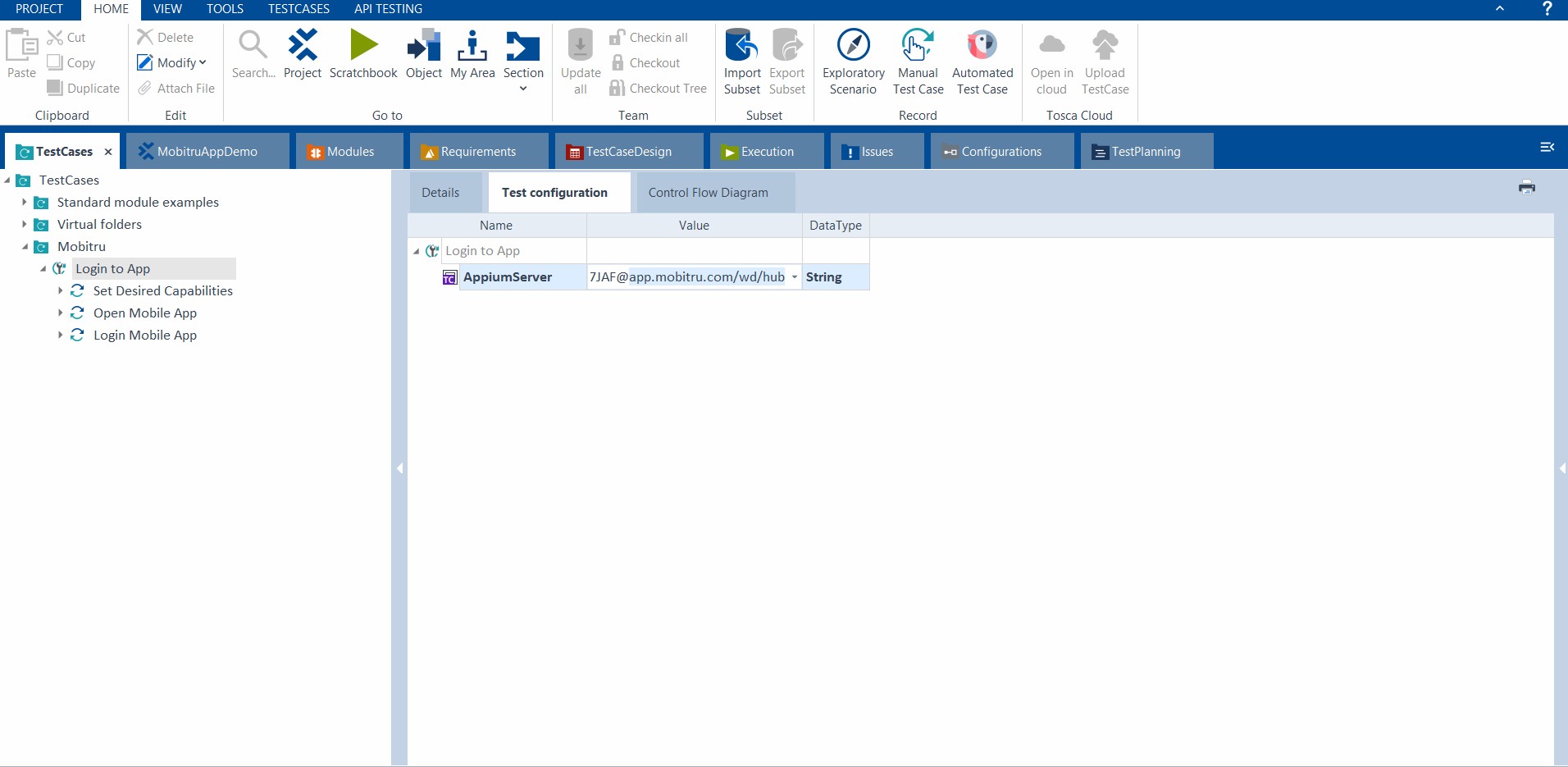
Step 4: Add a step for building the desired capabilities
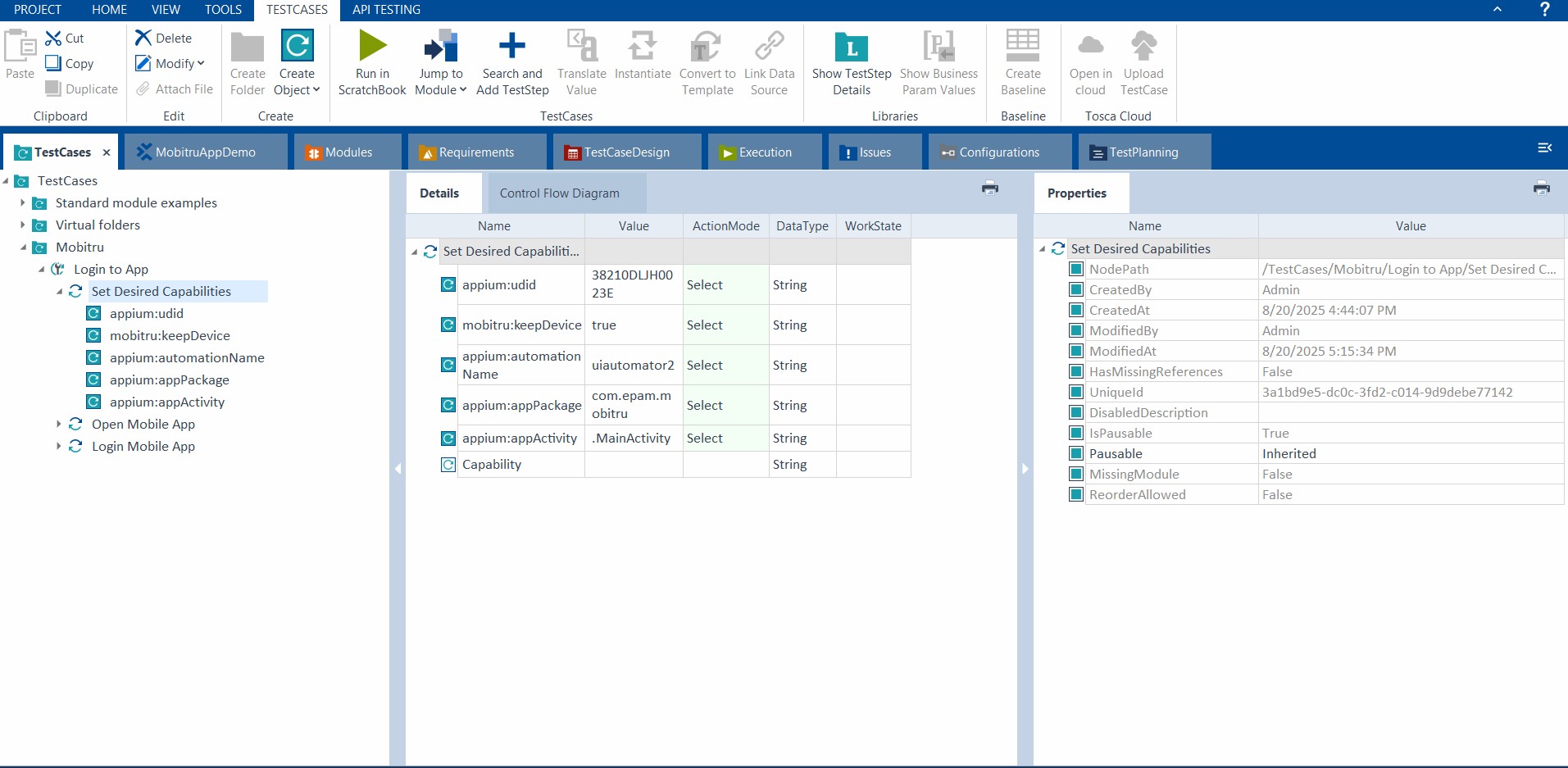
As a first step in the test, it’s necessary to build the desired capabilities for a mobile test session, which include:
- appium:udid – the serial of the selected Device
- mobitru:keepDevice – the flag to enable or disable the device release after closing the mobile test session.
- appium:automationName – the name of the Appium driver to interact with the Device.
- Android:
- appium:appPackage – the Android application’s package name
- appium:appActivity – the Android application’s activity
- iOS:
- appium:bundleId – the iOS application’s unique identifier
Step 5: Add a step to open the installed mobile app
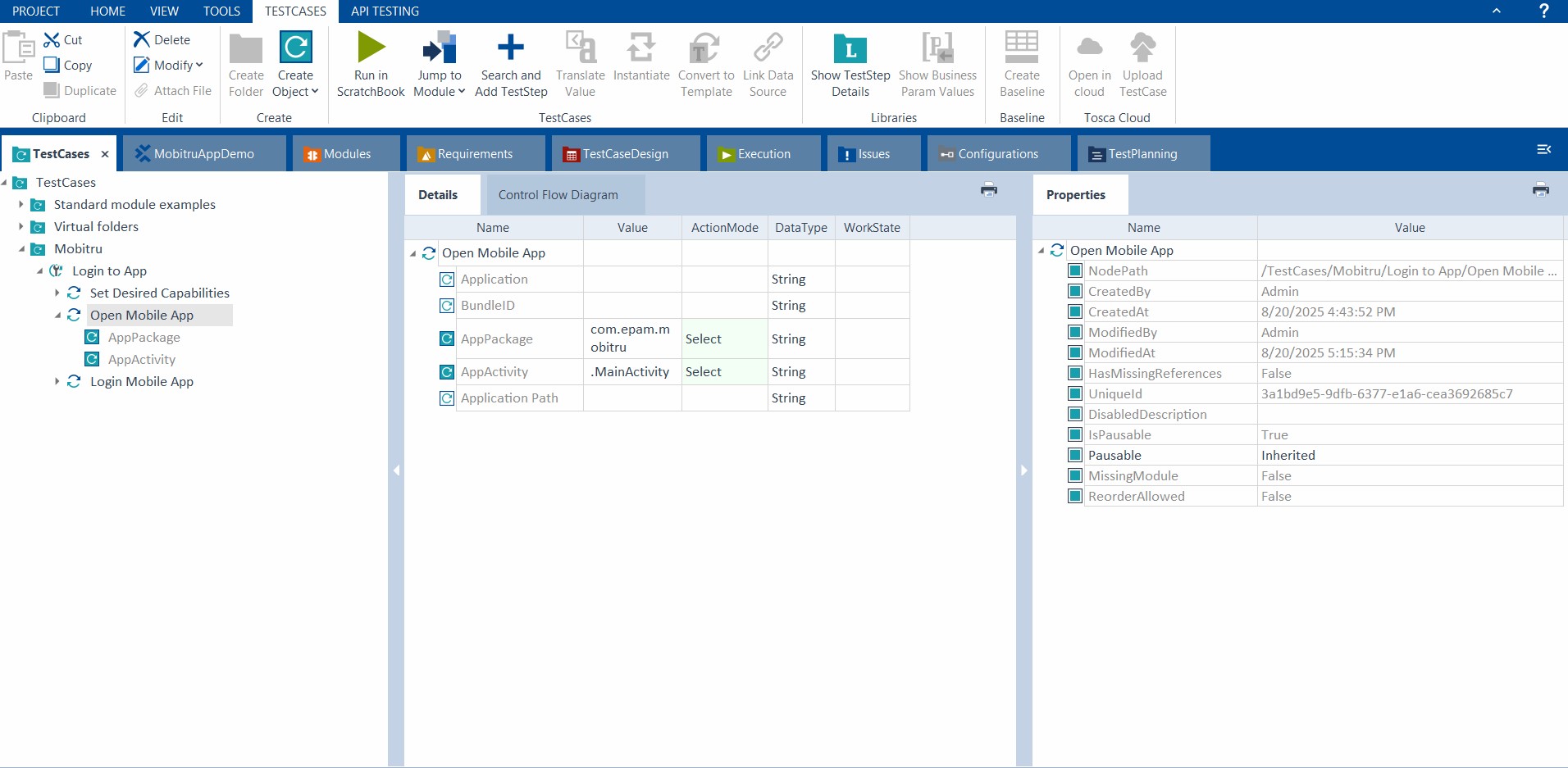
After building the capabilities, it’s necessary to add a step to open and activate the installed mobile application, which includes:
- Android:
- AppPackage – the Android application’s package name
- AppActivity – the Android application’s activity
- iOS:
- BundleId – the iOS application’s unique identifier
Step 6: Start the test execution
To start the test execution, please right-click on your test case and select the Run in ScratchBook option
After that, a mobile test session will be started on the selected Mobitru’s device, and test actions will be performed.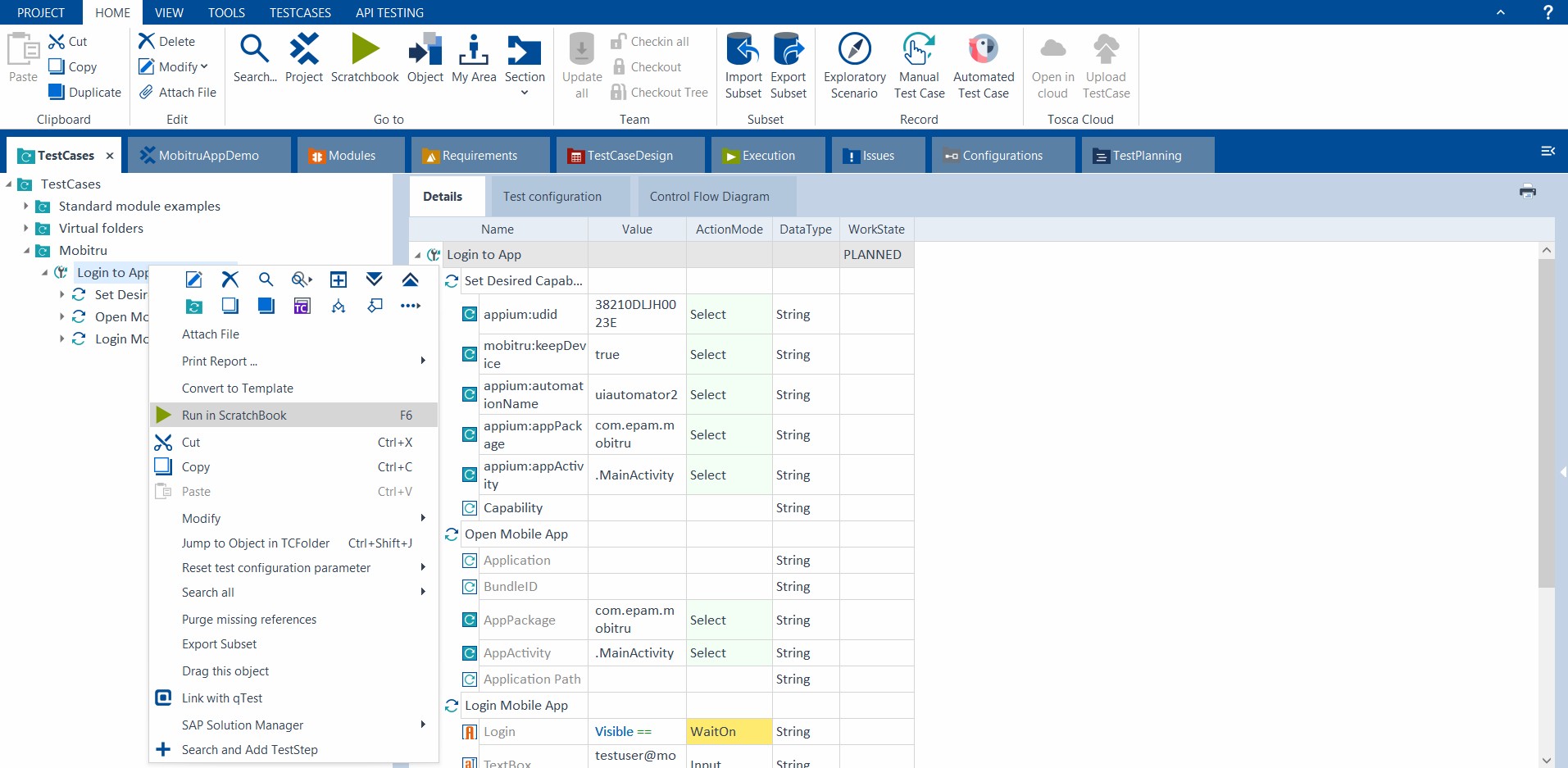
When the test execution is finished, Tosca will display a report showing the status of each test step: